Anti-Wrinkle Injections
Which Facial Areas Can Be Treated With Anti-Wrinkle Injections?
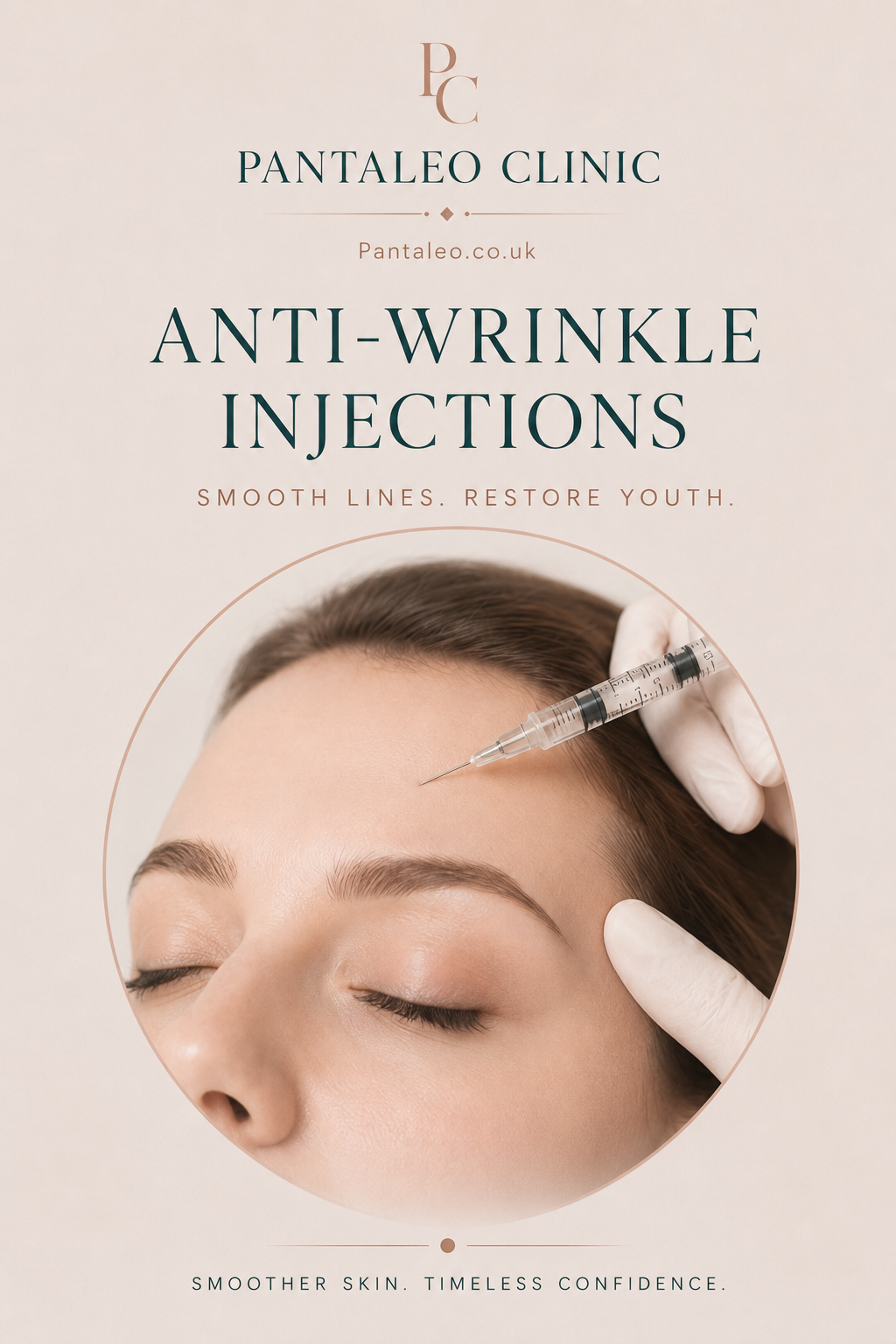
Many people researching facial rejuvenation options begin by looking for information about which areas of the face can be treated with anti-wrinkle injections. This is entirely natural — understanding the scope of a treatment before booking a consultation helps patients approach their choices with greater confidence and clearer expectations.
Which Facial Areas Can Be Treated With Anti-Wrinkle Injections?
Many people researching facial rejuvenation options begin by looking for information about which areas of the face can be treated with anti-wrinkle injections. This is entirely natural — understanding the scope of a treatment before booking a consultation helps patients approach their choices with greater confidence and clearer expectations.
Anti-wrinkle injections, commonly associated with botulinum toxin, have been one of the most widely studied non-surgical aesthetic treatments for several decades. They are used across a broad range of facial areas to address dynamic lines — those formed through repeated facial movement — and can also be considered for certain functional and contouring concerns. However, suitability for treatment varies between individuals, and not every area will be appropriate for every patient.
This article provides an educational overview of the facial areas commonly assessed for anti-wrinkle injection treatment, the science behind how these injections work, what patients might realistically expect, and why a thorough consultation with a qualified practitioner is always the essential first step.
Which Facial Areas Can Be Treated With Anti-Wrinkle Injections?
Anti-wrinkle injections are commonly used across the upper, mid, and lower face. Frequently assessed areas include the forehead, frown lines between the brows, crow's feet around the eyes, and the brow region. Certain lower face and neck areas may also be considered. Treatment suitability depends on individual facial anatomy and a professional assessment.
Understanding Anti-Wrinkle Injections: What Are They?
Anti-wrinkle injections typically involve the use of botulinum toxin type A, a purified protein that temporarily relaxes specific facial muscles. When administered by a qualified practitioner, small, precise doses are placed into targeted muscles to reduce the appearance of lines caused by repeated movement.
Botulinum toxin has been used in medical settings for many years and has an established body of clinical research supporting its use in aesthetic practice. In the United Kingdom, botulinum toxin products are prescription-only medicines, meaning they must be prescribed and administered — or supervised — by a qualified prescriber, such as a doctor, dentist, nurse prescriber, or pharmacist prescriber. Patients can review this educational explainer on how anti-wrinkle injections work on expression lines to prepare for a prescriber consultation.
The treatment is generally described as minimally invasive. Sessions are relatively brief, typically requiring no anaesthesia, and most patients return to daily activities quickly afterwards. However, the experience, outcomes, and suitability of treatment are highly individual, and outcomes cannot be guaranteed for any patient.
It is important to approach any aesthetic treatment with realistic expectations and informed understanding, which is why seeking a comprehensive consultation before proceeding is always advisable.
Ready to look your best?
Book a free, no-obligation consultation with our medically led team in South Kensington.
How Do Anti-Wrinkle Injections Work? The Science Explained
To understand which areas of the face can benefit from anti-wrinkle injections, it helps to understand why lines and wrinkles form in the first place.
The skin is supported by a network of proteins — most notably collagen and elastin — that keep it firm, plump, and resilient. From our mid-twenties onwards, the natural production of these proteins begins to slow. The skin gradually becomes thinner, less elastic, and less able to spring back after repeated movement. At the same time, repeated contractions of facial muscles — through expressions such as smiling, squinting, frowning, and raising the brows — create creases in the overlying skin. Over time, these creases deepen into what are known as dynamic lines.
Botulinum toxin works by blocking the release of acetylcholine, the chemical messenger responsible for signalling muscle contraction. When injected into a targeted muscle, it temporarily interrupts this signal, causing the muscle to relax. With the muscle at rest, the overlying skin has the opportunity to appear smoother. The effect is temporary — typically lasting several months — because nerve endings naturally regenerate over time.
This mechanism is specific to the injected muscle and does not affect surrounding tissues when administered accurately by a trained practitioner. Understanding this biological process helps clarify both the possibilities and the limitations of the treatment.
The Upper Face: Forehead Lines and Frown Lines
The upper face is the area most commonly associated with anti-wrinkle injections and includes some of the treatment's most well-recognised applications.
Forehead lines — the horizontal creases that develop across the forehead when the brows are raised — are among the most frequently assessed areas. These lines develop gradually through repeated elevation of the frontalis muscle, which runs across the forehead. Over years of consistent movement, the skin above can develop visible horizontal creasing at rest.
Frown lines, also known as glabellar lines or the "elevens", are the vertical lines that appear between the eyebrows when frowning or concentrating. They are caused by the repeated contraction of the corrugator supercilii and procerus muscles. Many patients find these lines give a tired, stressed, or stern appearance — even when they are not expressing those emotions.
When assessing these areas, a practitioner will consider factors such as the depth of existing lines, the underlying muscle activity, and the relationship between the forehead and brow position. Treating the forehead without carefully evaluating the brows, for example, can influence brow position and shape — which is why these areas are typically assessed together.
Individual facial anatomy plays a significant role in how treatment is planned, and what is appropriate for one patient may not be suitable for another.
Around the Eyes: Crow's Feet and Brow Lifting
The periorbital area — the region surrounding the eyes — is another commonly assessed zone for anti-wrinkle treatment.
Crow's feet are the fine radiating lines that fan outward from the outer corners of the eyes. They are primarily caused by contraction of the orbicularis oculi muscle during smiling, squinting, and other expressions. Because the skin around the eyes is particularly thin and delicate, and because we make expressions involving this area thousands of times each day, crow's feet tend to develop relatively early compared to other facial lines.
Anti-wrinkle injections in this area aim to soften the appearance of these dynamic lines by gently relaxing the relevant portion of the orbicularis oculi muscle. Practitioners must exercise particular precision here to preserve natural-looking expression and avoid unintended effects.
Brow position is also sometimes addressed in this region. A small amount of carefully placed botulinum toxin can, in some patients, create a subtle lifting effect at the outer brow — sometimes referred to as a brow lift. This is achieved by relaxing the muscles that pull the brow downward, allowing the muscles that elevate it to act with less resistance. However, suitability for this application varies considerably between individuals and requires careful assessment.
Not sure which treatment is right for you?
Speak to our practitioners — we will assess your needs and recommend a tailored plan.
The Mid and Lower Face: Beyond the Forehead
While the upper face is most commonly discussed in relation to anti-wrinkle injections, certain areas of the mid and lower face may also be considered during a professional assessment, depending on individual anatomy and concerns.
Bunny lines are the small diagonal lines that appear across the nose when smiling or scrunching the nose. These are caused by contraction of the nasalis muscle and can be assessed for treatment in suitable candidates.
The lip area may be considered in some patients for perioral lines — fine vertical lines around the lips sometimes referred to as "smoker's lines" or "lipstick lines" — caused by repeated pursing of the lips. Treatment in this area requires significant care and precision, as the muscles around the mouth are involved in many functional activities including speaking and eating.
The chin can develop a dimpled or "peau d'orange" texture due to overactivity of the mentalis muscle. In some cases, anti-wrinkle injections may be considered to soften this appearance.
The corners of the mouth (depressor anguli oris) may also be assessed in certain patients where downturned mouth corners contribute to a persistently sad or downturned expression.
It is important to note that the lower face is a more complex area to treat and requires a highly experienced practitioner. Individual assessment is essential before any treatment is considered.
The Neck: Platysmal Bands
The neck is an area that many patients overlook when researching anti-wrinkle injections, yet it can be a meaningful consideration for some individuals.
The platysma is a broad, thin muscle that runs from the lower face down the neck. With age, the fibres of the platysma can become more prominent, creating visible vertical bands running down the front of the neck. These are sometimes called platysmal bands or neck cords. They may become more noticeable when speaking, swallowing, or turning the head.
A treatment approach sometimes referred to in clinical literature as a "Nefertiti lift" involves placing anti-wrinkle injections along the lower jaw and into the platysmal bands to reduce the downward pull of this muscle. The aim is to achieve a subtle lifting and smoothing effect along the jawline and neck. This is a more advanced application that should only be performed by a highly experienced practitioner following thorough assessment. If neck skin quality is your primary concern, this companion guide on Profhilo for the neck explains when bio-remodelling may be discussed instead.
As with all areas of the face and neck, suitability varies significantly between individuals, and this approach would only be recommended following comprehensive clinical evaluation.
Additional Areas of Assessment: Hyperhidrosis and Jaw Slimming
Beyond wrinkle treatment, botulinum toxin has several other applications in aesthetic and medical practice that a practitioner may discuss during consultation.
Masseter reduction involves injections into the masseter muscles — the large chewing muscles at the sides of the jaw. In some individuals, these muscles are hypertrophic (enlarged), which can create a wider or squarer jaw appearance. Botulinum toxin injections into this area can gradually reduce the bulk of the muscle over time, potentially creating a softer, more oval facial contour. This is a more specialist application requiring careful assessment and should not be considered routine.
Hyperhidrosis (excessive sweating) of the underarms, hands, or feet is another recognised application of botulinum toxin, though this falls outside the facial aesthetic context of this article.
It is worth noting that the scope of anti-wrinkle injection treatments continues to evolve as research develops. Patients should always discuss current evidence and individual suitability with a qualified practitioner.
Trusted, medically led care in London
Explore our full range of aesthetic treatments and transparent pricing.
Who May Benefit From a Professional Consultation?
Many people consider seeking a consultation about anti-wrinkle injections when they begin to notice changes in their facial appearance that concern them. This might include:
- The gradual development of forehead lines or frown lines that remain visible at rest
- Fine lines around the eyes that have become more pronounced
- Changes in brow position or a more tired appearance that does not reflect how they feel
- Lines around the mouth or on the nose that appear during expressions
- Concerns about facial symmetry or contour
- Questions about whether a non-surgical approach might be appropriate for their goals
It is equally valid to seek a consultation simply to understand one's options, without any commitment to proceeding with treatment. A thorough consultation provides an opportunity to discuss concerns openly, receive an honest professional assessment, and explore whether any treatment — aesthetic or otherwise — is appropriate.
Not everyone who enquires about anti-wrinkle injections will be deemed a suitable candidate. A responsible practitioner will always advise against treatment if it is not appropriate for an individual's anatomy, health history, or expectations. Book a consultation at Pantaleo Clinic to discuss your facial concerns with an experienced aesthetic practitioner.
Potential Benefits, Realistic Expectations, and Limitations
Potential Benefits
When performed appropriately by a qualified practitioner in a suitable candidate, anti-wrinkle injections may:
- Soften the appearance of dynamic lines and wrinkles in treated areas
- Create a more rested or refreshed appearance
- Temporarily reduce visible muscle activity in targeted areas
- Complement other aesthetic treatments as part of a broader rejuvenation plan
Realistic Expectations
It is important to understand that:
- Results vary between individuals and cannot be guaranteed
- The treatment addresses dynamic lines (caused by movement) more effectively than static lines (present at rest)
- Effects are temporary, typically lasting approximately three to six months, depending on the individual, area treated, and product used
- Multiple sessions over time may be required to maintain results
- The degree of visible improvement will depend on skin quality, depth of existing lines, and individual muscle activity
Limitations
- Anti-wrinkle injections cannot reverse all signs of facial ageing
- They do not replace volume lost through the ageing process — this may require a different approach, such as dermal fillers
- They are not appropriate for all patients, including those who are pregnant, breastfeeding, or have certain neuromuscular conditions
- Results in some areas are subtle and may not meet all patient expectations
- Side effects, while generally mild and temporary, can include bruising, swelling, headache, and, in rare cases, asymmetry or unintended muscle weakness
Aftercare and Supporting Skin Health
Following anti-wrinkle injections, practitioners typically provide specific aftercare guidance tailored to the individual. General considerations often include:
In the immediate period following treatment: Avoiding rubbing, massaging, or applying pressure to the treated areas for at least 24 hours Remaining upright for several hours after treatment if advised Avoiding strenuous exercise, heat exposure (such as saunas or steam rooms), and alcohol in the first 24–48 hours Being mindful not to lie face down shortly after treatment
Ongoing skin health considerations: Daily broad-spectrum SPF application is one of the most consistently recommended measures for supporting skin health and minimising the appearance of lines over time Maintaining adequate skin hydration through appropriate skincare products Staying well-hydrated and following a balanced diet to support overall skin health Using skincare products containing evidence-supported ingredients, such as retinoids or antioxidants, as advised by a practitioner
Supporting overall skin health alongside periodic aesthetic treatments can contribute to better, longer-lasting outcomes for many patients. Your practitioner may recommend complementary treatments such as skin booster therapies to support and enhance results over time.
Ready to look your best?
Book a free, no-obligation consultation with our medically led team in South Kensington.
Key Points to Remember
- Anti-wrinkle injections can be used across multiple facial areas, including the forehead, frown lines, crow's feet, brow region, and selected lower face and neck areas, depending on individual suitability.
- Botulinum toxin is a prescription-only medicine in the UK and must be administered or supervised by a qualified prescriber.
- Results are temporary — typically lasting three to six months — and individual outcomes vary.
- Not all areas of the face are appropriate for every patient. Suitability depends on anatomy, skin quality, health history, and treatment goals.
- A thorough consultation is always the essential first step before any aesthetic treatment is considered.
- Supporting skin health through sun protection, hydration, and a healthy lifestyle can complement the benefits of aesthetic treatments over time.
Frequently Asked Questions
How many facial areas can be treated with anti-wrinkle injections in a single session?
This depends entirely on the individual patient's assessment and treatment goals. Some patients may have only one area addressed, while others may have several areas treated in the same appointment. A practitioner will consider the total dose of botulinum toxin required across all areas, potential interactions between treatments (for example, the relationship between forehead and brow treatments), and overall safety before recommending a treatment plan. There is no universal answer — the appropriate approach is always tailored to the individual.
How long do anti-wrinkle injections typically last?
The effects of anti-wrinkle injections are temporary. In most patients, results are visible for approximately three to six months, though this varies depending on the individual's metabolism, the area treated, the dose used, and how frequently the treatment has been received previously. Some patients find that with regular treatment over time, intervals between sessions may extend slightly. Your practitioner will advise on the most appropriate timing for your individual circumstances.
Are anti-wrinkle injections painful?
Most patients describe the sensation of anti-wrinkle injections as mild discomfort rather than significant pain. Fine needles are used, and the injections are brief. Some areas of the face may feel slightly more sensitive than others. Practitioners may use topical numbing cream, cold compresses, or other techniques to improve comfort, though these are not always necessary. If you are concerned about discomfort, this is worth discussing with your practitioner during your consultation.
What are the main risks associated with anti-wrinkle injections?
As with any injectable treatment, anti-wrinkle injections carry potential risks. Common temporary effects include mild bruising, swelling, and redness at injection sites. Headache can occasionally occur, particularly after forehead treatment. Less commonly, patients may experience temporary asymmetry or unintended weakness of adjacent muscles — for example, a temporary drooping of the eyelid (ptosis), which is uncommon but can occur if botulinum toxin migrates beyond the intended site. Serious adverse events are rare when treatment is performed by a qualified and experienced practitioner. A full discussion of risks should form part of every consultation and consent process.
Can anti-wrinkle injections be combined with other treatments?
Many patients combine anti-wrinkle injections with other aesthetic treatments as part of a broader facial rejuvenation approach. Dermal fillers, skin boosters, and skin quality treatments may complement the effects of botulinum toxin in some individuals. The appropriateness of combination treatment should always be assessed individually. Not all combinations are suitable for all patients, and the timing and sequencing of treatments matter. A qualified practitioner can advise on what approach may be most suitable following a thorough assessment.
Who is not suitable for anti-wrinkle injections?
Anti-wrinkle injections are not appropriate for everyone. Contraindications may include pregnancy, breastfeeding, known allergy to botulinum toxin or any product components, and certain neuromuscular conditions such as myasthenia gravis or Lambert-Eaton syndrome. Some medications may also affect suitability. A thorough medical history review during consultation will identify any contraindications. It is important to be transparent with your practitioner about your full health history, medications, and any supplements you are taking.
Conclusion
Anti-wrinkle injections offer a versatile and well-researched approach to addressing dynamic facial lines and certain other concerns across multiple areas of the face and neck. From the forehead and frown lines to the eye area, lower face, and neck, the range of potential treatment zones is broader than many patients initially realise. However, no two patients are alike, and the areas appropriate for treatment — as well as the approach, dosing, and expected outcomes — will always depend on individual anatomy, skin quality, and personal goals.
Understanding the science behind how these injections work, what they can and cannot achieve, and the importance of selecting a qualified and experienced practitioner are all essential parts of making an informed decision. Whether you are exploring options for the first time or seeking to deepen your understanding before a consultation, approaching the subject with clear, balanced information is always the right starting point.
Treatment suitability, risks, and expected outcomes should always be assessed individually during a professional consultation.
If you have questions about anti-wrinkle injections or would like to explore whether a treatment might be appropriate for you, speaking with a qualified aesthetic practitioner is the most valuable step you can take.
Written by Pantaleo Team
Medically led aesthetic clinic
Injectables
Interested in Anti-Wrinkle Injections (Botox)?
Book a complimentary, no-pressure consultation with our GDC-registered practitioner to find out whether this treatment is right for you.