PRP Hair Treatment
Can PRP Help Improve Hair Density? Understanding Realistic Expectations
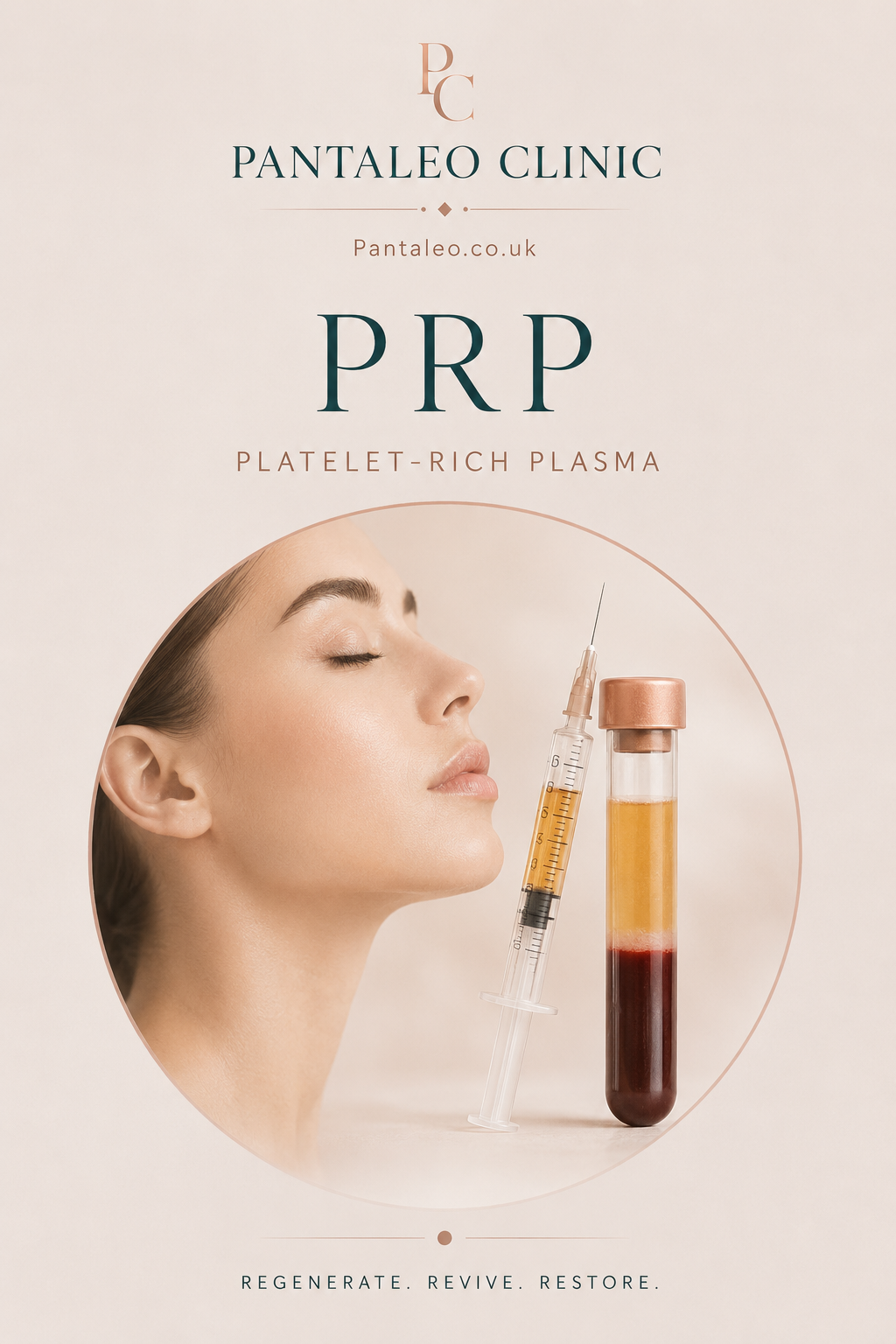
Hair thinning is a concern that affects a significant number of people, and it is one of the reasons many patients in London begin researching aesthetic and medical treatments online. Whether the thinning is gradual, concentrated at the crown, or affecting overall density, the search for effective, evidence-informed options is entirely understandable.
Introduction
Hair thinning is a concern that affects a significant number of people, and it is one of the reasons many patients in London begin researching aesthetic and medical treatments online. Whether the thinning is gradual, concentrated at the crown, or affecting overall density, the search for effective, evidence-informed options is entirely understandable.
Platelet-Rich Plasma (PRP) scalp injections have emerged as one of the most widely discussed non-surgical approaches to supporting hair health. However, with so much varying information available, it can be difficult to know what to expect or whether this approach is appropriate for your individual circumstances.
This article aims to provide a clear, balanced, and educational overview of PRP for hair density. It covers how the treatment works, the science behind it, realistic expectations, who may benefit from a professional assessment, and important considerations including limitations and aftercare. As with all aesthetic treatments, individual suitability should always be assessed during a qualified consultation before any decisions are made.
Can PRP Injections Help Improve Hair Density?
PRP (Platelet-Rich Plasma) scalp injections involve introducing concentrated growth factors from a patient's own blood into the scalp to potentially stimulate hair follicle activity. Research suggests PRP may support hair density in certain types of hair thinning, though results vary between individuals. It is not a guaranteed solution and professional assessment is essential to determine suitability.
What Is PRP and How Is It Used for Hair Thinning?
Platelet-Rich Plasma (PRP) is a treatment that uses components derived from the patient's own blood to deliver concentrated growth factors to a target area. In the context of hair health, PRP is administered via a series of small injections into the scalp, with the aim of supporting the local environment in which hair follicles function.
The process begins with a small blood draw, typically from the arm. The sample is then placed in a centrifuge, a device that spins the blood at speed to separate its components. This process isolates the platelet-rich portion of the plasma, which contains a higher concentration of growth factors than standard blood. This concentrated plasma is then carefully injected into areas of concern on the scalp, such as the crown or vertex, where thinning may be more noticeable.
Because PRP uses the patient's own biological material, it is generally considered a well-tolerated procedure with a lower risk of adverse reactions compared to synthetic alternatives. However, this does not mean it is without risk, and individual suitability must always be assessed beforehand. PRP for hair is not a one-size-fits-all treatment, and the outcome depends on a range of individual factors including the cause and extent of hair thinning.
Ready to look your best?
Book a free, no-obligation consultation with our medically led team in South Kensington.
The Science Behind PRP and Hair Follicle Activity
To understand why PRP is used in hair-related treatments, it helps to have a basic understanding of how hair follicles work and what can affect their function over time.
Hair follicles go through natural cycles of growth (anagen), transition (catagen), and rest (telogen). In cases of hair thinning, follicles may spend more time in the resting phase or may become miniaturised — meaning they produce progressively finer, shorter hairs rather than the thicker strands associated with fuller density.
Platelets in the blood are best known for their role in clotting, but they also contain a range of bioactive proteins and growth factors, including platelet-derived growth factor (PDGF), vascular endothelial growth factor (VEGF), and transforming growth factor (TGF). When concentrated PRP is introduced into the scalp tissue, these growth factors may support microcirculation, encourage cell proliferation, and create a more favourable environment for follicular activity.
Research into PRP for hair loss — particularly androgenetic alopecia, which is the most common form — has produced encouraging findings in a number of studies. However, the evidence base is still developing, study designs vary, and results are not uniform across all patients. PRP is not a cure for hair loss, and its effectiveness depends on the underlying cause of thinning, the patient's overall health, and the stage of hair loss at the time of treatment.
Common Reasons Patients Research PRP for the Scalp
Patients enquiring about PRP for hair density tend to share a number of common concerns. Understanding these helps contextualise why this treatment has gained attention in aesthetic and medical settings.
Crown and vertex thinning is one of the most frequently cited concerns, particularly in patients experiencing androgenetic alopecia, commonly referred to as pattern hair loss. This type of thinning often begins at the top of the scalp and can be progressive if left unaddressed.
Diffuse thinning — where hair appears less dense across a wider area — is another reason patients seek information about PRP. This can be related to hormonal changes, nutritional deficiencies, stress, or other systemic factors.
Post-partum hair shedding and telogen effluvium (temporary shedding triggered by physical or emotional stress) are also areas where PRP has been explored, though the appropriateness of treatment depends entirely on individual assessment and the resolution of the underlying cause.
Patients are often drawn to PRP because it uses their own biological material rather than introducing synthetic substances. The non-surgical nature of the treatment and the relatively manageable recovery period are also factors that feature prominently in patient research. It is important to note, however, that PRP is not appropriate for all causes of hair loss, and some conditions require a different clinical approach entirely.
Who May Be Considered for a PRP Hair Assessment?
PRP for hair density is not suitable for everyone, and suitability can only be properly determined during a thorough consultation with a qualified practitioner. That said, there are certain patient profiles where a professional assessment may be particularly worthwhile.
Individuals experiencing early to moderate androgenetic alopecia — pattern hair loss — are among those most commonly assessed for PRP in clinical settings. Early intervention, when follicles remain active, is generally considered more promising than treatment at an advanced stage of hair loss.
Patients who have existing hair follicles in the area of concern are typically considered better candidates than those with areas of complete hair loss, where follicular activity may be significantly diminished or absent.
Those who prefer non-surgical options and are not yet considering or eligible for hair transplantation may also enquire about PRP as part of a broader hair management plan.
However, PRP may not be appropriate for patients with certain blood conditions, those taking specific medications, individuals with active scalp infections or inflammatory scalp conditions, or those whose hair loss is driven by an unmanaged systemic condition. This is why a thorough medical and aesthetic history is an essential part of the consultation process.
A qualified practitioner will assess the pattern, extent, and likely cause of hair thinning before discussing whether PRP forms part of an appropriate treatment plan.
Not sure which treatment is right for you?
Speak to our practitioners — we will assess your needs and recommend a tailored plan.
What Realistic Expectations Look Like
One of the most important conversations during any aesthetic consultation is the discussion of realistic expectations. PRP for hair density is no different, and it is worth being clear about what the treatment may and may not be able to achieve.
Potential benefits observed in clinical studies include:
- Increased hair count in treated areas
- Improved hair shaft thickness
- Reduced hair shedding over time
- A more favourable environment for follicular activity
These outcomes are not guaranteed, and the degree of improvement varies considerably between individuals. Some patients report visible improvement in density and texture following a course of treatment; others may experience more modest changes.
Important limitations to understand:
- PRP is unlikely to reverse significant or long-established hair loss
- It does not create new follicles in areas of complete baldness
- Multiple sessions are typically required before any change is noticeable, and timelines are similar to those outlined in this PRP session planning guide
- Results are not permanent and maintenance treatments are usually recommended
- The underlying cause of hair loss must be identified and managed alongside any PRP treatment
PRP should be considered as a supportive measure within a broader PRP treatment strategy for thinning hair rather than a standalone cure. In some cases, it may be used alongside other clinically appropriate interventions such as topical or oral treatments recommended by a qualified practitioner.
The Treatment Process: What Patients Can Generally Expect
Understanding the treatment process helps patients make informed decisions and manage expectations from the outset.
A typical PRP hair session involves the following steps:
1. Blood draw — A small amount of blood is taken from the patient, usually from the arm, in the same way as a routine blood test.
2. Centrifugation — The blood sample is placed in a centrifuge and spun to separate the platelet-rich plasma from other blood components.
3. Preparation — The PRP is drawn into syringes ready for injection.
4. Scalp injections — The concentrated plasma is injected into the scalp at intervals across the target area. A topical anaesthetic cream may be applied beforehand to improve comfort.
5. Post-treatment guidance — The practitioner will provide aftercare instructions and discuss follow-up appointments.
Sessions typically last between 45 minutes and 90 minutes in total, including preparation time. A course of treatment usually involves multiple sessions spaced several weeks apart, followed by maintenance treatments at longer intervals. The exact protocol depends on individual assessment and the practitioner's clinical judgement.
Some patients report mild discomfort during injections, temporary redness, or slight scalp sensitivity immediately after treatment. These effects are generally short-lived.
Aftercare and Supporting Scalp Health
Following PRP scalp treatment, a practitioner will typically advise on a set of aftercare guidelines to support the best possible outcome and minimise the risk of complications. While specific instructions may vary, there are several general principles that are commonly recommended.
In the immediate period after treatment:
- Avoid washing the hair for at least 24 hours following treatment
- Refrain from strenuous exercise or activities that cause excessive perspiration for 24–48 hours
- Avoid direct sun exposure to the scalp for several days
- Avoid applying hair products, dyes, or chemical treatments to the scalp for a period specified by your practitioner
- Avoid swimming, saunas, or steam rooms in the days immediately following treatment
Ongoing scalp and hair health support:
- A balanced diet that includes adequate protein, iron, zinc, and vitamins D and B12 supports hair follicle health broadly
- Staying well hydrated supports overall skin and tissue health
- Minimising chronic stress where possible can help manage conditions such as telogen effluvium
- Using gentle, appropriate hair care products recommended by your practitioner may complement treatment
- Adhering to follow-up appointments allows the practitioner to monitor progress and adjust the treatment plan as needed
It is advisable to discuss any supplements or medications with your practitioner before commencing PRP, as some may affect platelet function and therefore the quality of the PRP prepared.
Trusted, medically led care in London
Explore our full range of aesthetic treatments and transparent pricing.
Potential Risks and Considerations
As with any injectable treatment, PRP scalp injections carry a small degree of risk, and patients should be fully informed before proceeding. A responsible practitioner will always discuss risks during the consultation process.
Potential side effects and risks include:
- Mild pain, tenderness, or sensitivity at injection sites
- Temporary redness, swelling, or bruising on the scalp
- Itching or temporary scalp irritation
- Rare risk of infection at injection sites if post-treatment care is not followed correctly
- In uncommon cases, temporary increased shedding shortly after treatment, sometimes referred to as a "shedding phase"
Serious complications from PRP prepared from a patient's own blood are uncommon; however, the procedure should always be carried out in a clinical setting by a qualified practitioner with appropriate training and experience.
PRP is not suitable for individuals with platelet disorders, haematological conditions, those taking anticoagulant medication, or patients with active scalp infections. Full medical history disclosure during the consultation is therefore essential.
Patients should also be aware that the aesthetic medicine sector in the UK is regulated, and it is important to seek treatment from practitioners who are appropriately qualified and operating within a regulated clinical environment.
When a Professional Assessment May Be Helpful
If you are experiencing hair thinning or a reduction in hair density that is causing you concern, a professional assessment can provide valuable clarity — regardless of whether treatment ultimately forms part of your plan.
A qualified practitioner can:
- Help identify or refer for investigation of any underlying causes of hair loss
- Assess the pattern, extent, and likely progression of thinning
- Discuss whether PRP or another approach may be appropriate for your individual situation
- Explain what realistic outcomes might look like based on your specific presentation
- Advise on a broader hair health strategy, which may or may not include PRP
Seeking a consultation does not commit you to any treatment. It is an opportunity to receive personalised, evidence-informed information and to ask questions in a safe clinical environment. For patients based in London considering hair-related aesthetic treatments, exploring options such as PRP injection treatment at Pantaleo may provide a useful starting point for understanding the range of approaches available.
It is also worth noting that hair loss has a significant emotional and psychological dimension for many patients. A compassionate, patient-centred approach to assessment — one that acknowledges both the clinical and personal aspects of hair thinning — is an important part of quality aesthetic care.
PRP in the Context of Other Hair and Skin Treatments
PRP is one option within a broader landscape of treatments available for hair thinning and scalp health. Understanding how it sits alongside other approaches can help patients make more informed decisions.
Polynucleotides (PDRN/PN) are another regenerative injectable option that has gained clinical interest in recent years. Like PRP, polynucleotides are thought to work through tissue-level regenerative mechanisms, and some practitioners use them in combination with or as an alternative to PRP for certain patients. You can read more in this guide on how PRP growth factors support follicles and compare mechanisms during consultation.
Topical and oral medical treatments — such as minoxidil and finasteride — have an established evidence base for androgenetic alopecia and are often considered as part of a comprehensive hair management plan. These are prescription-only in certain forms and require medical oversight.
Hair transplantation represents a surgical option for appropriate candidates, typically those with more advanced, stable hair loss. PRP is sometimes used as a complementary treatment in hair transplant care, though this is outside the scope of this article.
No single treatment is universally superior, and the most appropriate approach depends on the individual — their pattern of hair loss, its cause, their health status, and their treatment goals. A thorough consultation remains the most reliable starting point.
Ready to look your best?
Book a free, no-obligation consultation with our medically led team in South Kensington.
Benefits, Limitations, and Individual Variation: A Balanced Overview
It is important to approach PRP for hair density with a balanced perspective. The treatment has genuine clinical interest and a growing evidence base, but it is not without its limitations.
Potential benefits: Uses the patient's own biological material Non-surgical with manageable recovery May support follicular activity in appropriate candidates Can be combined with other treatments as part of a broader plan Generally well tolerated
Limitations to consider: Evidence varies across different study populations and designs Results are not uniform — some patients respond more noticeably than others Not effective for all causes or stages of hair loss Requires multiple sessions and ongoing maintenance Does not regenerate follicles where none remain active Cost and time commitment over a course of treatment
Factors that may influence outcomes: Age and hormonal status Cause and stage of hair loss Overall health and nutritional status Platelet quality and concentration in the prepared PRP Adherence to aftercare and maintenance schedule Practitioner experience and technique
Individual variation is a fundamental aspect of aesthetic medicine, and no practitioner should guarantee specific results. Honest, transparent communication about what may and may not be achievable is the hallmark of responsible clinical practice.
Key Points to Remember
- PRP scalp injections involve injecting concentrated growth factors from the patient's own blood into the scalp to potentially support hair follicle activity.
- Realistic expectations are essential — PRP may support hair density in suitable candidates but is not a guaranteed or universal solution for hair loss.
- Individual suitability must always be assessed — not everyone is an appropriate candidate, and the cause of hair thinning must be properly identified.
- Multiple sessions are typically required, and maintenance treatments are usually recommended to sustain any benefit over time.
- Risks are generally low but not absent — all procedures carry some degree of risk and should be performed by a qualified practitioner in a clinical setting.
- A professional consultation is an appropriate first step for anyone experiencing hair thinning and considering treatment options.
Frequently Asked Questions
How many PRP sessions are typically needed to see a change in hair density?
Most practitioners recommend an initial course of three to four sessions, spaced approximately four to six weeks apart, before results can be meaningfully assessed. Hair growth cycles are slow, meaning visible changes — if they occur — are generally not apparent for three to six months after beginning treatment. Individual responses vary considerably. Following an initial course, maintenance sessions every four to six months are commonly advised. The exact protocol should be tailored to you during a consultation with a qualified practitioner.
Is PRP for hair loss painful?
Most patients describe PRP scalp injections as mildly uncomfortable rather than significantly painful. A topical anaesthetic cream is often applied to the scalp before treatment to reduce discomfort. Some sensitivity, tenderness, or a dull aching sensation in the treated area may be experienced for a day or two after the procedure. If you have particular concerns about pain or discomfort, it is worth discussing these with your practitioner before treatment begins so that appropriate steps can be taken to maximise your comfort.
Can PRP work for all types of hair loss?
No — PRP is not suitable for all causes or types of hair loss. It has been most studied in the context of androgenetic alopecia (pattern hair loss) and is generally considered most relevant where hair follicles remain active but diminished. It is unlikely to be effective in areas of complete scarring alopecia, where follicular structures are no longer present, or in cases of hair loss driven by an untreated systemic condition. The cause of your hair loss should always be properly assessed before considering PRP as a treatment option.
Are there any situations where PRP is not recommended?
Yes. PRP is generally not recommended for individuals with blood disorders, those taking anticoagulant medication, patients with active scalp infections or inflammatory scalp conditions, and those with certain autoimmune conditions. Pregnancy and breastfeeding may also affect suitability. A full medical history should always be disclosed during the consultation process so that the practitioner can make a safe and appropriate assessment. Your safety is the priority, and a responsible practitioner will decline to treat if contraindications are identified.
How long do the results of PRP hair treatment last?
Results from PRP hair treatment are not permanent. In patients who respond positively, the effects are thought to last several months before maintenance treatment is needed. Androgenetic alopecia is a progressive condition influenced by ongoing hormonal factors, meaning that without maintenance, any improvement may gradually diminish over time. Many patients incorporate PRP into a longer-term hair management strategy, attending maintenance sessions every four to six months. Individual longevity of results varies and should be discussed in detail with your practitioner.
Can PRP be combined with other hair loss treatments?
In some cases, practitioners may recommend PRP as part of a broader treatment plan that includes other clinically appropriate interventions. This might include medically prescribed topical or oral treatments, scalp health advice, or nutritional support where relevant. Whether combination approaches are suitable depends entirely on individual assessment. PRP is not a replacement for addressing any underlying medical causes of hair loss. Always discuss your full medical history and current treatments with your practitioner to ensure any plan is safe and appropriate for your circumstances.
Not sure which treatment is right for you?
Speak to our practitioners — we will assess your needs and recommend a tailored plan.
Conclusion
PRP scalp injections represent a clinically interesting, non-surgical option for patients experiencing certain types of hair thinning. The treatment draws on the patient's own biology to potentially support follicular activity, and research findings — while still developing — suggest it may offer benefit for appropriate candidates, particularly those with early to moderate androgenetic alopecia.
However, it is equally important to understand what PRP cannot achieve. It is not a cure for hair loss, it does not suit all patients or all causes of thinning, and results vary meaningfully between individuals. Realistic expectations, a thorough understanding of both the potential benefits and the limitations, and a commitment to a properly planned treatment course are all essential parts of making an informed decision.
If you are experiencing hair thinning and are considering your options, the most meaningful step is to arrange a professional assessment with a qualified practitioner who can evaluate your specific circumstances, discuss appropriate approaches, and help you understand what might — and might not — be achievable in your case.
For those based in London, a consultation at a reputable aesthetic clinic can provide personalised, evidence-informed guidance in a safe clinical environment. You can explore the range of aesthetic consultation services available at Pantaleo to take the first step towards understanding your options.
Treatment suitability, risks, and expected outcomes should always be assessed individually during a professional consultation.
To explore this further, see Can PRP Hair Treatment Be Combined With Other Hair-Loss Treatments?.
Written by Pantaleo Team
Medically led aesthetic clinic
Rejuvenation
Interested in PRP Injections?
Book a complimentary, no-pressure consultation with our GDC-registered practitioner to find out whether this treatment is right for you.