Skin & Rejuvenation
PRP Treatment: The Complete Guide to the ‘Vampire’ Facial & Hair Therapy
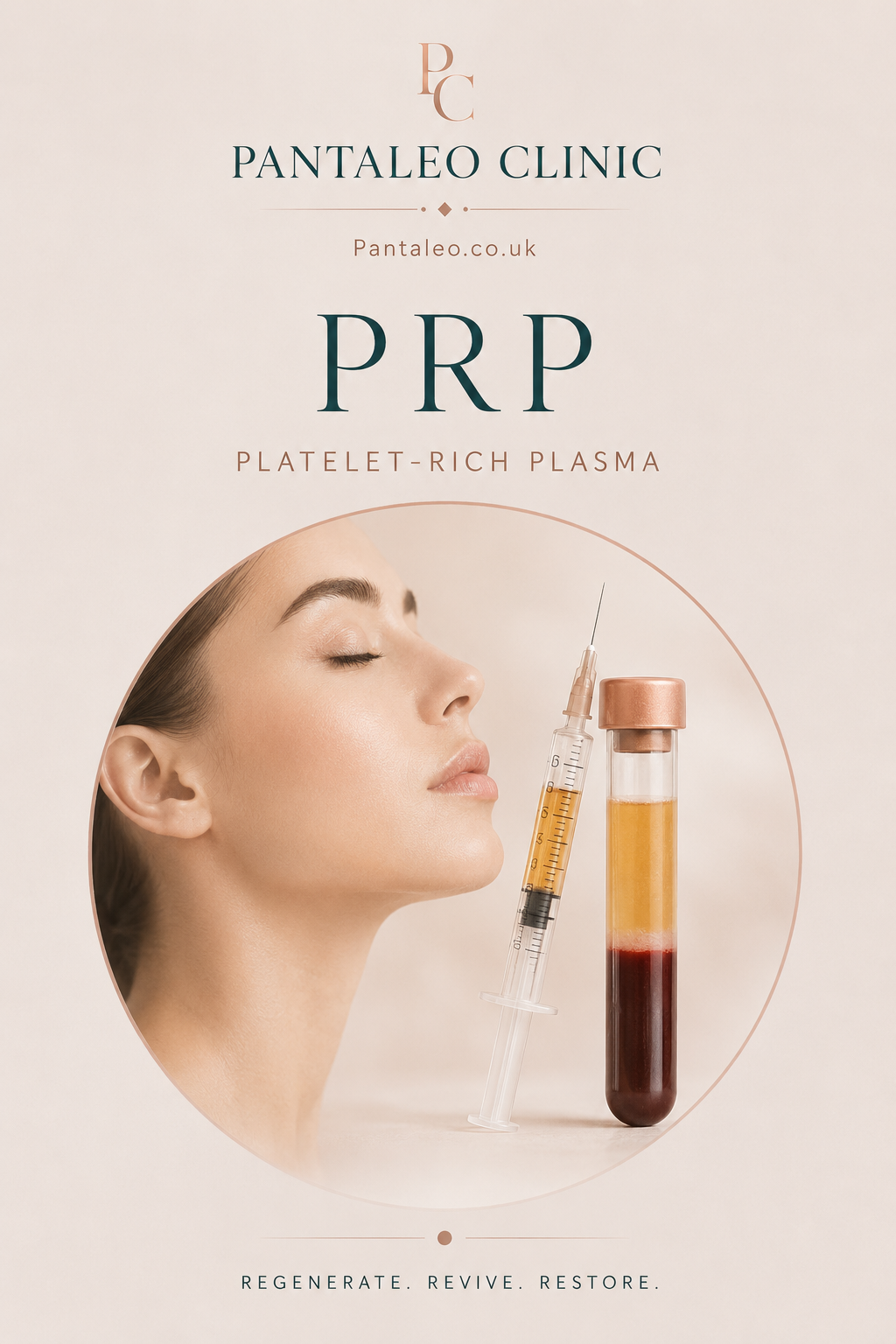
Few aesthetic treatments have captured the public imagination quite like PRP. Better known by its dramatic nickname — the ‘vampire facial’ — Platelet-Rich Plasma therapy has been embraced by everyone from elite athletes to A-list celebrities, and for good reason. It is one of the very few rejuvenation treatments that works entirely with your own biology, using nothing but the regenerative power found in your own blood.
But behind the headline-grabbing name lies a genuinely sophisticated, science-led treatment with applications far beyond a single glossy facial. From restoring radiance to tired, ageing skin to tackling the early stages of hair loss, PRP has earned its place as a cornerstone of modern, natural aesthetics.
In this complete guide, we explain exactly what PRP is, the science of how it works, what it can (and cannot) treat, what to expect during and after your appointment, and how to decide whether it is right for you. Whether you are considering PRP for your skin, your hair, or simply curious about the treatment everyone is talking about, this article will tell you everything you need to know.
What is PRP?
PRP stands for Platelet-Rich Plasma. To understand it, it helps to understand a little about blood. Your blood is made up of several components: red blood cells, white blood cells, plasma (the liquid that carries everything around your body), and platelets. While platelets are best known for their role in clotting, they are also packed with powerful proteins called growth factors.
These growth factors are your body’s natural repair signals. Whenever you cut yourself or damage a tissue, platelets rush to the site and release these proteins to kick-start healing — summoning new cells, stimulating fresh blood supply, and triggering the production of collagen and other building blocks of healthy tissue.
PRP therapy harnesses this natural process deliberately. By concentrating your own platelets into a small volume of plasma and reintroducing them precisely where they are needed — the face, scalp, or other areas — we effectively send a powerful repair signal to the body, encouraging it to regenerate, rejuvenate and renew.
Because the entire treatment is derived from your own body, there is nothing synthetic involved: no fillers, no chemicals and no foreign substances. This is precisely why PRP has become so popular among those seeking a more natural approach to looking and feeling their best.
The science: how does PRP work?
The process begins with a simple blood draw, much like a routine blood test. A small sample — usually no more than you would give at a standard medical appointment — is taken from your arm.
That sample is then placed into a centrifuge, a machine that spins at high speed. As it spins, the different components of the blood separate by weight: the heavier red blood cells sink to the bottom, while the lighter plasma rises to the top. In the middle sits the prized layer — the platelet-rich plasma, a golden, concentrated serum brimming with growth factors.
This concentrated plasma can contain several times the platelet count of normal blood, which means a correspondingly higher dose of those regenerative growth factors. The practitioner carefully draws off this layer, ready to be reintroduced into the treatment area.
Depending on the goal, the PRP is then either injected directly into the deeper layers of the skin or scalp, or applied to the surface in combination with microneedling — a technique that creates thousands of tiny channels for the plasma to penetrate. Once delivered, the growth factors get to work, signalling your cells to ramp up collagen production, improve blood supply, and accelerate cellular turnover and repair.
The result is not an instant, artificial change but a gradual, natural improvement as your own tissue regenerates over the following weeks and months. In essence, PRP does not do the work for your body — it teaches your body to do the work itself.
PRP for skin rejuvenation
When used on the face, neck, décolletage or hands, PRP is a remarkable skin-quality treatment. It does not add volume like a dermal filler, nor freeze movement like anti-wrinkle injections. Instead, it improves the fundamental health and appearance of the skin from within.
Over a course of treatments, the surge in collagen and elastin produced in response to PRP gradually firms and thickens the skin, softening fine lines and improving elasticity. Skin texture becomes smoother, tone becomes more even, and that dull, tired look gives way to a fresh, healthy radiance — the famous PRP ‘glow’.
PRP is particularly valued for treating areas and concerns that other treatments struggle with. The delicate under-eye region, where the skin is thinnest and most prone to crepiness and dark shadows, often responds beautifully. It is also a popular choice for improving the appearance of acne scarring, enlarged pores and crepey skin on the neck and décolletage.
Because the results build naturally, they tend to look entirely authentic. Friends and colleagues may comment that you look well-rested or refreshed without being able to pinpoint why — the hallmark of a truly natural rejuvenation treatment.
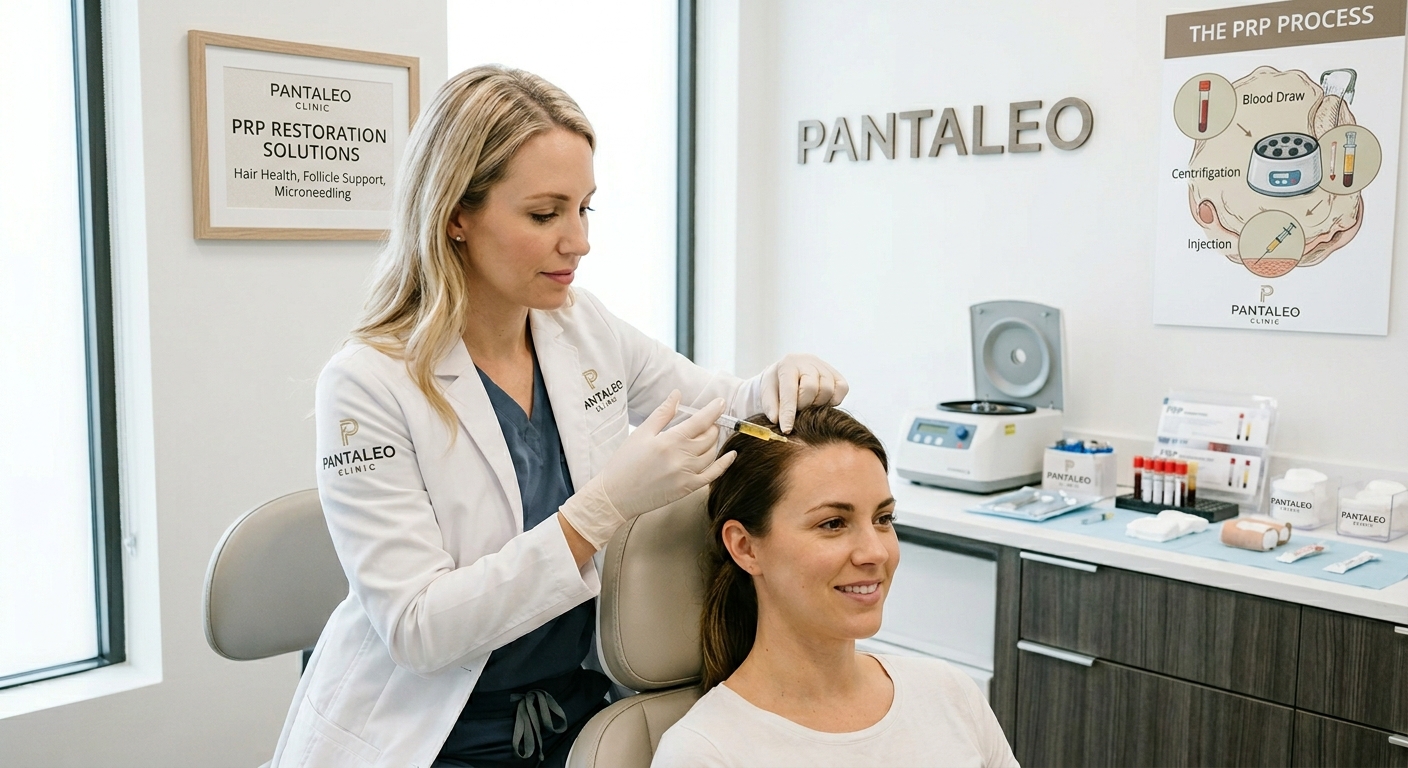
Curious whether PRP is right for your skin?
Book a complimentary consultation with our GDC-registered practitioner in London.
PRP for hair loss and thinning
One of PRP’s most exciting applications is in the treatment of hair loss. Thinning hair — whether due to genetics, hormonal changes, stress or ageing — affects a huge proportion of both men and women, and can have a profound impact on confidence.
When injected into the scalp, the growth factors in PRP work to revitalise hair follicles that have become dormant or are beginning to miniaturise. They improve the blood supply to the follicle, prolong the active growth phase of the hair cycle, and create a healthier environment for stronger, thicker regrowth.
PRP is most effective in the earlier stages of hair thinning, where follicles are still present but underperforming, rather than in areas of complete, long-established baldness where follicles are no longer viable. For the right candidate, it can reduce shedding, improve density and restore fullness.
A typical hair-restoration plan involves an initial course of sessions — often three to four spaced a few weeks apart — followed by periodic maintenance treatments to sustain the results. Many clients combine PRP with other evidence-based hair treatments for an even greater effect, something we discuss individually at consultation.
Concerned about thinning hair?
Discover whether PRP hair therapy could help — arrange a no-pressure consultation today.
What to expect during your PRP appointment
One of the reasons PRP is so popular is that it is a straightforward, well-tolerated treatment that fits easily into a busy life. Here is what a typical appointment looks like from start to finish.
First comes the consultation. At Pantaleo, every PRP journey begins with a thorough discussion of your goals, your medical history and your suitability for treatment. We will explain realistic outcomes, agree a tailored plan and answer all of your questions before anything proceeds.
Next, a small blood sample is taken from your arm. This takes just a couple of minutes and feels no different to a standard blood test. The sample is then spun in the centrifuge for around ten minutes to separate and concentrate the platelet-rich plasma.
While the plasma is being prepared, a numbing cream is applied to the treatment area to keep you comfortable. Once ready, the PRP is delivered — either via a series of fine injections or in combination with microneedling, depending on your treatment plan. The whole process typically takes between forty-five minutes and an hour.
Afterwards, you may notice some redness, mild swelling or pinpoint marks at the treatment sites, much like a mild sunburn or the after-effects of a facial. This usually settles within a day or two, and most people return to their normal routine immediately.
Results: when will I see them and how long do they last?
PRP is a regenerative treatment, which means it works by stimulating your body’s own processes rather than producing an instant cosmetic change. As a result, patience is rewarded.
In the days immediately following treatment you may notice a temporary glow from the increased circulation. The true results, however, develop over the following weeks as new collagen forms and tissue regenerates. Most clients see a visible improvement in skin quality from around four to six weeks, with results continuing to build over the course of their treatment plan.
For skin rejuvenation, a course of three treatments spaced roughly four to six weeks apart is typically recommended to achieve the best results, followed by maintenance sessions every six to twelve months. For hair, an initial course followed by ongoing maintenance gives the most reliable outcome.
Because PRP improves the underlying health of your skin and follicles rather than masking concerns, the results are progressive and natural. The longevity varies from person to person depending on age, lifestyle and the concern being treated, which is why a personalised maintenance plan matters.
The key benefits of PRP
PRP has earned its reputation for several compelling reasons. Perhaps the most significant is that it is entirely natural: because the treatment uses your own blood, there is no risk of allergic reaction to a foreign substance and nothing synthetic is introduced into your body.
It is also remarkably versatile. A single treatment principle — harnessing your own growth factors — can be applied to rejuvenate the skin, refresh the delicate under-eye area, improve the appearance of scarring, and restore thinning hair. Few treatments offer such breadth.
The results are natural and progressive, avoiding the ‘overdone’ look that concerns so many people. And because it stimulates genuine tissue regeneration, PRP improves the quality of your skin and hair at a foundational level rather than simply concealing the signs of ageing.
Finally, downtime is minimal. For most people, PRP fits comfortably around work and social commitments, with only mild, short-lived after-effects.
Is PRP right for you?
PRP is suitable for a wide range of people, but as with any medical treatment it is not right for everyone. It is an excellent option for those who want a natural approach to improving skin quality, softening early signs of ageing, refreshing tired skin, or addressing early-stage hair thinning.
It is particularly appealing to those who prefer to avoid synthetic products, who want results that build gradually and look authentic, or who are looking to complement other treatments as part of a holistic plan.
There are, however, some circumstances in which PRP may not be appropriate — for example, certain blood disorders, some medications, active skin infections in the treatment area, or pregnancy. This is exactly why a proper medical consultation is essential. As a medically led clinic, we always assess your individual health and suitability before recommending treatment, and we will tell you honestly if PRP is not the right choice for you.
Is PRP safe?
When performed by a qualified, medically trained practitioner using sterile, single-use equipment, PRP has an excellent safety profile. Its greatest safety advantage is intrinsic to the treatment itself: because the plasma comes from your own body, the risk of an allergic or hypersensitivity reaction is effectively eliminated.
As with any treatment involving injections or microneedling, there are minor, temporary side effects to be aware of — most commonly redness, mild swelling, tenderness or occasional small bruises at the treatment sites, all of which resolve quickly.
The most important factor in PRP safety is the expertise of the person performing it and the standards of the clinic. The blood must be handled correctly, sterile technique must be impeccable, and the practitioner must have a thorough understanding of facial and scalp anatomy. This is why we always recommend choosing a regulated, medically led clinic rather than an unregulated provider.
How to prepare for PRP — and how to care for your skin afterwards
Getting the most out of PRP starts before you even arrive at the clinic. Because the treatment relies on the quality of your own blood and platelets, being well-hydrated genuinely helps — we recommend drinking plenty of water in the day or two beforehand, as this makes the blood draw easier and supports a richer plasma yield.
In the week leading up to your appointment, it is sensible to avoid anti-inflammatory medications such as ibuprofen where possible, as these can interfere with the very inflammatory healing response that makes PRP work. It is also wise to limit alcohol and, if you smoke, to cut down, since both can impair healing and dull your results. Any blood-thinning supplements such as high-dose fish oil or vitamin E are best paused, but always check with your practitioner and never stop prescribed medication without medical advice. We will go through all of this with you at your consultation.
On the day, arriving with clean, make-up-free skin (for facial treatments) helps us work efficiently and hygienically. After your treatment, the aftercare is refreshingly simple. For the first 24 hours we advise leaving the skin clean and bare, avoiding make-up over the treated area, and steering clear of intense exercise, saunas, steam rooms and very hot showers, all of which can aggravate redness or swelling.
For a day or two you may look a little flushed, as though you have caught the sun, and the skin may feel slightly tight or sensitive — this is completely normal and a sign the treatment is doing its job. Applying a gentle, recommended moisturiser and a high-factor SPF, and resisting the urge to pick or exfoliate, will help your skin recover beautifully. Within a few days the redness fades and the regenerative process continues quietly beneath the surface.
PRP vs. other treatments: how does it compare?
One of the most common questions we are asked is how PRP compares with other popular treatments — and the honest answer is that it does something quite different, which is precisely why it can be so valuable.
Unlike anti-wrinkle injections, PRP does not relax muscles or stop expression lines forming; it improves the underlying quality and health of the skin itself. Unlike dermal fillers, it does not add volume or reshape features; instead it stimulates your own collagen for a subtler, more global improvement in texture and radiance. And unlike many resurfacing lasers or chemical peels, it works from within by harnessing your body’s own repair mechanisms rather than removing the top layers of skin.
This is why PRP is so often described as a ‘skin-quality’ treatment rather than a ‘correction’. It will not erase a deep static wrinkle or replace lost cheek volume on its own — but it will make skin healthier, firmer, brighter and more resilient at a foundational level, which no filler or toxin can do. For many people, the best results come not from choosing PRP instead of these treatments, but from understanding what each one does well.
Combining PRP with other treatments
Because PRP improves the canvas itself, it pairs exceptionally well with other treatments as part of a considered, holistic plan. A popular and effective combination is PRP with microneedling — sometimes the origin of the ‘vampire facial’ name — where the micro-channels created allow the growth-factor-rich plasma to penetrate deeply and amplify the collagen-stimulating effect.
PRP also complements injectable treatments beautifully. Many of our London clients use anti-wrinkle injections to soften dynamic lines and dermal fillers to restore lost volume, while relying on PRP to keep the overall quality, tone and glow of their skin at its best. In the same way, PRP can sit alongside bio-remodelling treatments such as Profhilo and skin boosters as part of a broader skin-health strategy — an approach we explore in depth in our article on combining PRP and Profhilo.
For hair, PRP is frequently combined with other evidence-based therapies to maximise density and slow further thinning. The right combination depends entirely on your individual concerns, your skin or scalp, and your goals — which is why we always design a personalised plan rather than offering a one-size-fits-all package. At your consultation we will explain exactly how different treatments could work together for you, and in what order.
PRP at Pantaleo in London
At Pantaleo, PRP is delivered by an experienced, GDC-registered medical practitioner in a calm, discreet and impeccably clean clinical environment. We use sterile, single-use kits and meticulous technique to ensure both your safety and the quality of your plasma.
We believe great results begin with great advice. That is why every treatment starts with an honest, no-pressure consultation, during which we assess your skin or hair, discuss realistic outcomes and design a plan tailored entirely to you. We never upsell, and we will always recommend the most appropriate approach for your individual concern — even if that means suggesting an alternative treatment.
With transparent pricing, dependable aftercare and a genuine commitment to natural-looking results, we aim to deliver the standard of care we would want for ourselves and our own families. You can read more about our PRP treatment and book a complimentary consultation whenever you are ready.
The bottom line
PRP is a rare thing in aesthetics: a treatment that delivers genuine, science-backed rejuvenation using nothing but your body’s own resources. Whether you are looking to restore radiance to tired skin, soften the early signs of ageing, refresh the delicate eye area, or breathe new life into thinning hair, PRP offers a natural, versatile and well-tolerated solution.
As with any aesthetic treatment, the key to a beautiful, safe result lies in expert assessment and skilled delivery. If you are considering PRP in London, we would be delighted to talk you through your options and help you decide whether it is right for you.
Frequently asked questions
Does PRP really use my own blood?+
Yes. A small sample of your blood is drawn, spun in a centrifuge to concentrate the platelets and growth factors, and then reintroduced into your skin or scalp. Nothing synthetic is added.
How many PRP sessions will I need?+
For skin, a course of around three sessions spaced four to six weeks apart is typical, followed by maintenance every six to twelve months. For hair, an initial course of three to four sessions followed by periodic maintenance gives the best results. Your exact plan is tailored at consultation.
Is there any downtime after PRP?+
Downtime is minimal. You may experience redness, mild swelling or pinpoint marks for a day or two, similar to a mild sunburn, after which most people return to normal activities immediately.
When will I see results from PRP?+
Because PRP stimulates your own collagen and tissue regeneration, results build gradually. Most clients notice visible improvement from around four to six weeks, with results continuing to develop over the treatment course.
Is PRP safe?+
PRP has an excellent safety record because it uses your own blood, eliminating the risk of allergic reaction. When performed by a qualified, medically trained practitioner using sterile, single-use kits, side effects are minor and temporary.
How much does PRP cost in London?+
At Pantaleo, PRP for the face starts from £300 and PRP for hair from £325 per session. Course pricing and your tailored plan are confirmed at your free consultation.
Written by Dr. Shilan Mirian
Lead Aesthetic Practitioner, Pantaleo
Rejuvenation
Interested in PRP Injections?
Book a complimentary, no-pressure consultation with our GDC-registered practitioner to find out whether this treatment is right for you.